A Systematic Literature Review and Comparative Analysis that Question Scientific Hegemony
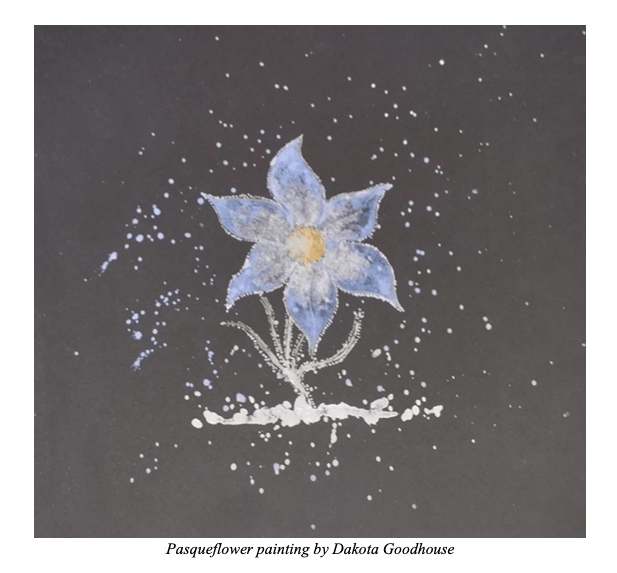
Introduction: Pulsatilla nuttalliana is a plant used by the Lakota people of the Standing Rock community to induce abortion. The knowledge of its abortifacient properties is considered by the Lakota people as a gift from Waxcha Washte Win, the Beautiful Flower Woman. Similarly, Caulophyllum thalictroides is used by different Indigenous communities to induce abortion. Due to differing epistemological perspectives, Western scientific academia does often not regard this “spiritual” knowledge of Indigenous people valuable for research and practice.
Aim: To reveal to what extend Western scientific academia has studied the abortifacient properties of Pulsatilla nuttalliana and Caulophyllum thalictroides. Consequently, to elucidate the similarities and differences between Western drugs to induce abortion (mifepristone and misoprostol) and the abortifacient properties of Pulsatilla nuttalliana.
Methods: Firstly, a systematic literature review including citation chaining was conducted to retrieve any scientific medical knowledge on the abortifacient properties of Pulsatilla nuttalliana and Caulophyllum thalictroides. Secondly, a normal literature review, including scientific and non-scientific databases, was conducted to, through a comparative analysis, look for pharmacological and medicinal similarities between Pulsatilla nuttalliana, and the Western drugs to induce abortion: mifepristone and misoprostol.
Results: No articles were found on the abortifacient properties of Pulsatilla nuttalliana. One paper acknowledges the abortifacient and teratogenic properties of Caulophyllum thalictroides but does not make any further comments on the mechanism of action. As to the second part, mifepristone is a strong antiprogestin, and misoprostol induces uterine contractility and cervical softening. None of these mechanisms have been found in the components of Pulsatilla nuttalliana. The results suggest that Pulsatilla nuttalliana is involved in pathways different to those mifepristone and misoprostol use. Alternative hypotheses for the mechanisms to induce abortion are suggested.
Conclusion: No available Western scientific literature has been found on the mechanisms of Pulsatilla nuttalliana and Caulophyllum thalictroides to induce abortion. This confirms that the Indigenous knowledge on these specific herbs has not been researched. Since the abortifacient mechanisms of mifepristone and misoprostol do not explain the mechanisms Pulsatilla nuttalliana, alternative hypotheses explore the anticancer and anti-inflammatory properties in addition to its ability to inhibit PKC-θ translation.
Discussion: The fact that Western science has not researched or proven the abortifacient nature of these herbs does not mean that they do not have them or cannot be used for these purposes. It is important for the scientific community and Western people to be respectful of the knowledge shared by Indigenous people to avoid the colonization of Indigenous ideas.
 Stolen Lives
Leave a comment