
Resistance both during and after the residential school takes on different forms for each individual person and is deeply tied to healing and reconciliation.
The topic of resistance is hard to explore using primary sources because missionaries and priests omitted and denied any events that would reflect badly on them and the residential schools, therefore there are no reports or evidence or pictures of active forms of resistance. In consequence, this is something we have been discovering and uncovering the past years as unmarked graves are found, and survivors and families are finding strength and safe spaces to speak up.
To explore the topic of resistance we decided to divide resistance into two different categories: resistance during the residential schools and resistance after and nowadays.
Resistance during the residential schools took on different forms. One of them is through expression. In the residential schools children were often prohibited to speak their Native languages, yet kids found secret ways to talk to each other in their own languages. They did this quietly to keep their culture and even when boys and girls weren’t supposed to talk to each other, it could be a means of secret communication. Educating Newcomers on situations where Native languages could be used without fear of punishment was part of this kind of secret resistance and some survivors for example also testified that they tried to keep their language alive in their head.
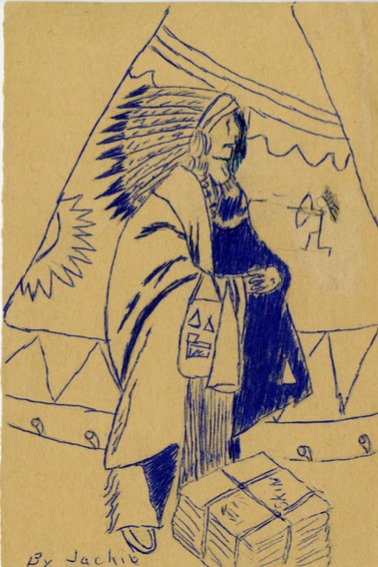
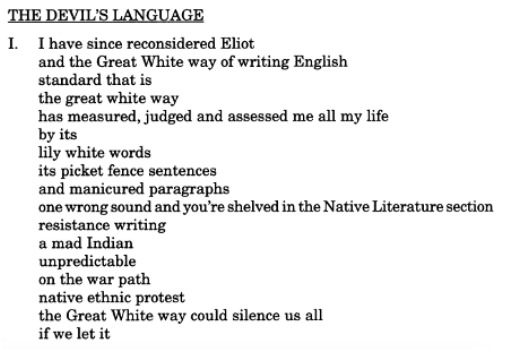
Another form of resistance during the residential schools was expressed in the development of a subculture. Even though the students came from many different places with different cultures and backgrounds, resistance became a common ground where students from different nations built loyalty to one another through their common and shared opposition to school authorities. The collective resistance and opposition led to a certain trust between the students. In these subcultures, students were building relationships and looking out for each other. Some of these collective forms of resistance took the form of stealing food together, watching out for each other, and even running away together in bigger groups.
After talking about resistance within residential schools, it is important to also look at what resistance looks like today and in recent years. While the practice of Indigenous ceremonies was banned and made illegal in Canada from 1884-1951, Indigenous people continued to learn and practice cultural ceremonies in secret back then, and more freely nowadays. Ceremony is a form of resistance because it focuses on the healing and overall well being of ceremony participants on a spiritual level. By actively participating in traditional ceremonies and revitalizing cultural practices, Indigenous communities assert the importance of these rituals in their lives. This serves as a form of resistance against attempts to dismiss or undermine their spiritual beliefs and practices. Asserting cultural sovereignty is a form of resistance against attempts to diminish or erase Indigenous cultural and spiritual practices.
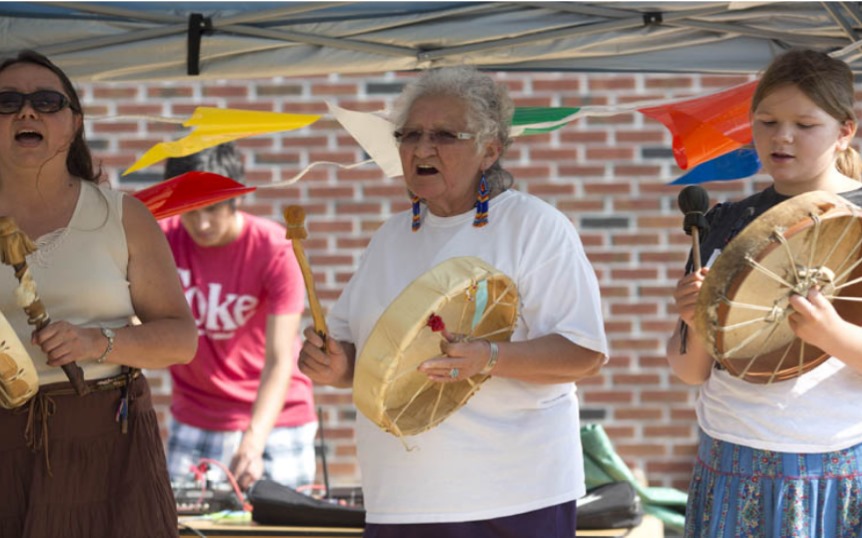
Another way of resistance nowadays is through cultural teachings and traditions. By actively participating in and preserving traditional cultural practices, Indigenous communities resist against assimilation from colonization and reclaim their cultural heritage that was attempted to be taken away from them. Another way is through community empowerment: Indigenous communities empower themselves by strengthening social networks, fostering intergenerational knowledge transfer, and creating spaces for cultural expression and education. This builds resilience/resistance against external pressures that threaten their traditional ways of life. The last way is through land and resource protection: many Indigenous groups advocate for the protection of their ancestral lands and natural resources, resisting exploitation and environmental harm that threatens their traditional way of life.
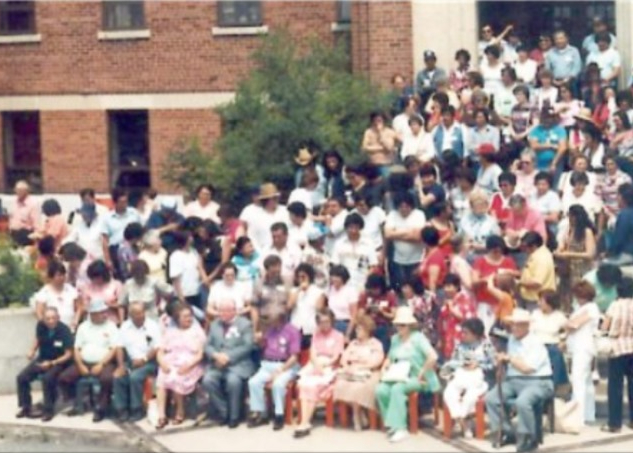
Resistance after the residential schools also takes on the form of leadership. Firstly, the formation of subcultures and intertribal relationships at the residential schools led to residential schools becoming spaces for the development of pan-Indian and intertribal identities. That sense of identity with other tribes led directly to the American Indian Movement (AIM) activism of the late 20th Century over political and cultural self-determination. These connections also contributed to alumni reunions, for the Shingwauk Residential School the first alumni reunion took place in 1981 and another one took place 10 years after that. At the second meeting the Children of Shingwauk Alumni Association was formed. Their mission is to provide for the well-being of the Children of Shingwauk Alumni who are former students of the Shingwauk, their families and their communities. The CSAA provides encouragement and support to all Indigenous students to maintain the traditions, history and culture. The connections, initiatives and organizations that emerged from the reunions contributed to the formation of spaces that allowed for the revitalisation of the culture, language and traditions but also provided the strength and power to take up leadership positions. Finally a last example of how the experiences of Indigenous children in residential schools led to resistance through leadership, are protests. Protests against the residential schools have been organized for a long time and this continues to happen nowadays. Marches take place in big cities like, for instance, the ones organized by the Orange Shirt Society in Orange Shirt Day, funded by Phyllis Webstad, survivor of St. Eugene’s Mission School in British Columbia. Phyllis Webstad is the Founder and Ambassador of the Orange Shirt Society, and tours the country telling her story and raising awareness about the impacts of the residential school system.
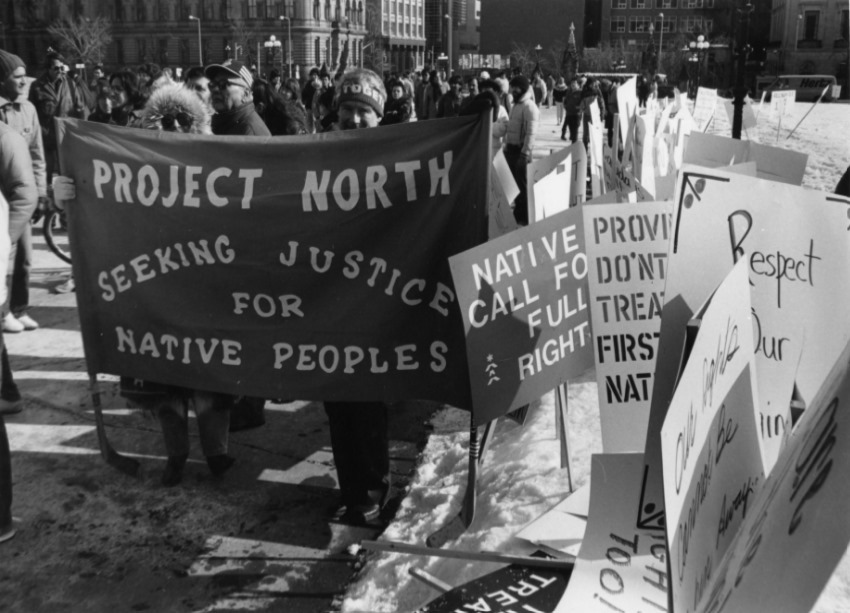
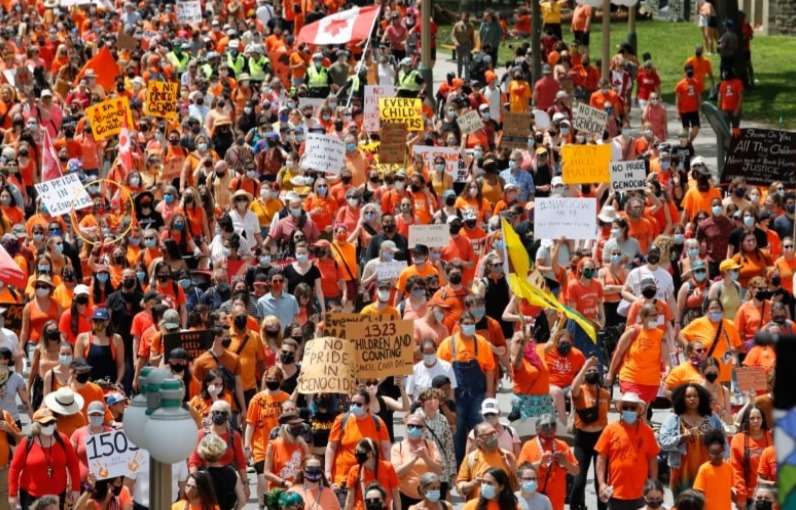
The ultimate form of resistance is the telling of stories and testimonies from residential school survivors as it tells the firsthand experiences of the treatment and conditions of these schools as well as their true purpose; to erase Indigenous cultures. By raising awareness through storytelling, survivors/families are continuing to resist the erasure of Indigenous culture as well as continuing to hold the residential schools accountable for what they did.
References
Algoma University. 2023. “Shingwauk Residential Schools Centre – Algoma.” Algoma. September 5, 2023. https://algomau.ca/research/shingwauk-residential-schools-centre/.
Algoma University. 2024. “Special Mission – Algoma.” Algoma. March 12, 2024. https://algomau.ca/special-mission/.
Burrage, Rachel. “Trauma, loss, resilience, and resistance in the Beauval Indian residential school.” PhD diss., 2018.
“Gathering and Conference | Shingwauk Residential School Center.” n.d. http://www.shingwauk.org/srsc/node/17.
Griffith, Jane. “Of linguicide and resistance: children and English instruction in nineteenth-century Indian boarding schools in Canada.” Paedagogica Historica 53, no. 6 (2017): 763-782.
Haig-Brown Vayro, Celia. “Invasion and resistance: native perspectives of the Kamloops Indian Residential School.” PhD diss., University of British Columbia, 1986.
“Indian Boarding Schools.” 2006. Indian Country Diaries. https://archives.algomau.ca/main/sites/default/files/2010-061_011_128.pdf.
Iseke-Barnes, Judy M. “Politics and power of languages: Indigenous resistance to colonizing experiences of language dominance.” Journal of Thought 39, no. 1 (2004): 45-81.
Klotz, Sarah. 2021. Writing Their Bodies: Restoring Rhetorical Relations at the Carlisle Indian School. https://doi.org/10.7330/9781646420872.
Koithan, Mary, and Cynthia Farrell. 2010. “Indigenous Native American Healing Traditions.” The Journal for Nurse Practitioners 6 (6): 477–78. https://doi.org/10.1016/j.nurpra.2010.03.016.
“Resistance.” 2019. Facing History & Ourselves. September 20, 2019. https://www.facinghistory.org/en-ca/resource-library/resistance.
“Resistance and Residential Schools.” n.d. The Canadian Encyclopedia. https://www.thecanadianencyclopedia.ca/en/article/resistance-and-residential-schools.
“Runaways and the Residential School System | Gladue Rights Research Database.” n.d. https://gladue.usask.ca/node/2612.
“Search Results for resistance – Oxford Reference.” n.d. Oxford Reference. https://www.oxfordreference.com/search?q=resistance&searchBtn=Search&isQuickSearch=true
“The Garden River Wellness Centre.” n.d. https://www.grwc.ca/non-residential-programs.
“TVO Today | Current Affairs Journalism, Documentaries and Podcasts.” n.d. https://www.tvo.org/article/felt-throughout-generations-a-timeline-of-residential-schools-in-canada.
Wilson, Kory, and Kory Wilson Colleen Hodgson (MNBC). 2018. “Appendix B: Indian Act Timeline.” Opentextbc.ca, September. https://opentextbc.ca/indigenizationfoundations/back-matter/appendix-b-indian-act-timeline/#:~:text=1884%E2%80%931951&text=The%20Indian%20Act%20banned%20ceremonies
 Stolen Lives
Leave a comment